
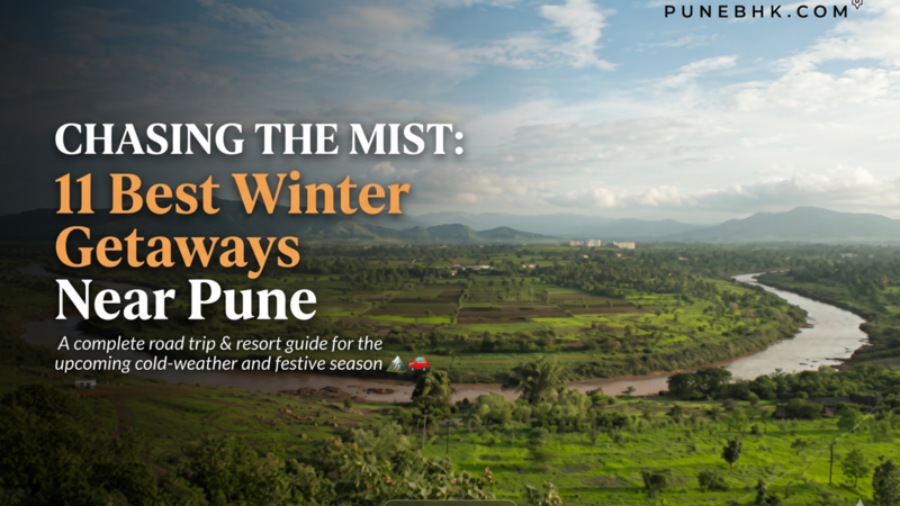
11 Best Winter Getaways Near Pune road trip guide banner featuring green Western Ghats landscape and lake view.

Chasing the Mist: 11 Best Winter Getaways Near Pune for 2026

Winter Getaways Near Pune Road Trip Couple Enjoying Tea in Sahyadri Hills

Chasing the Mist: 11 Best Winter Getaways Near Pune for 2026

As early morning temperatures dip across Maharashtra’s Western Ghats, crisp mountain air, swirling morning fog, and clear blue winter skies signal the official start of road trip season. For tech professionals, busy families, and young couples living in Pune, taking short drive weekend trips is the ultimate recipe to cure weekday burnout without wasting hours sitting in airport terminals.

Whether you are searching for scenic winter getaways near pune during long Diwali weekends, planning starry glamping nights under crisp skies, or mapping out cold-weather drives between November and February, this region offers incredible options. From serene lakeside campfires along Pawna Lake to luxury mountain retreats around Mulshi and strawberry picking in Mahabaleshwar, here is your comprehensive travel guide—complete with live road conditions, estimated travel times, temperature expectations, recommended itineraries, and handpicked stay options.

📍 Quick Guide: Top Winter Getaways Near Pune

  • Shortest Drive Escape: Mulshi & Paud Belt (45 km | ~1.2 Hours Drive)
  • Best for Stargazing & Camping: Pawna Lake & Tikona Basin (55 km via Expressway)
  • Lowest Temperature Zone: Mahabaleshwar & Mulshi Basins (Drops to 10°C–12°C in Dec-Jan)
  • Best Offbeat Drive: Bhor, Velhe & Panshet Backwaters (50 km south of city)
  • Real Estate Advantage: Homeowners in Wakad and Baner enjoy direct access to the Mumbai-Pune Expressway and NH 48, saving up to 45 minutes on every getaway.

Comparison: Best Winter Getaways Near Pune

Destination Distance & Time Road Condition Winter Temp Best Travel Vibe
Mulshi & Paud 45 km (1.2 Hours) Smooth / Widened 12°C – 18°C Lakeside Mist & Eco-Resorts
Pawna Lake 55 km (1.0 Hour) Expressway Route 14°C – 20°C Glamping & Bonfires
Lonavala & Khandala 65 km (1.2 Hours) 4-Lane Highway 15°C – 22°C Private Villas & Cafes
Mahabaleshwar & Panchgani 120 km (3.0 Hours) NH 48 / Scenic Ghats 10°C – 18°C Strawberries & Plateau Views
Panshet & Bhor 50 km (1.5 Hours) Scenic / Narrow 13°C – 19°C Water Sports & Fort Hikes
Lavasa & Temghar Dam 60 km (1.5 Hours) Winding Ghats 14°C – 21°C Italian Vibes & Promenade Walks

1. Mulshi & Paud Belt: Chilly Mornings & Misty Eco-Resorts

Tucked into the heart of the Western Ghats, the Mulshi Dam and backwaters region is widely regarded as one of the most romantic winter getaways near pune. The surrounding elevated hills trap cool air coming off the lake, creating misty morning fog that stays until 9:00 AM.

Road Conditions & Drive Guide

Route: Pune City → Chandani Chowk → Paud → Mulshi Dam Road (NH 753F).
Road Status: Post-monsoon resurfacing works along the Chandani Chowk to Paud corridor ensure a smooth, widened drive. The road is well-paved for all vehicles including sedans and luxury hatchbacks. Check real-time traffic conditions on Google Maps before embarking during peak Diwali weekends.

❄️ What Makes Winter Special in Mulshi

From late November to early February, temperatures drop to 12°C in the early hours. It is the perfect season for alfresco breakfasts overlooking misty backwaters, lakeside photography, and cozy campfire gatherings under clear night skies.

Top Recommended Stays & Resorts in Mulshi

  • Malhar Machi Mountain Resort: Premium hilltop cottages featuring unobstructed views of the Mulshi backwaters and heated infinity pools.
  • Residency Lake Resort & Spa: A comfortable luxury property surrounded by lush greenery, ideal for multi-generational family holiday trips.
  • Dharana at Shillim: A world-class luxury wellness retreat nestled inside the nearby Shillim valley, offering specialized winter spa routines and organic farm dining.

Love Taking Weekend Road Trips Without City Traffic?

Living in West Pune cuts your road trip travel times in half. Explore verified residential properties and family homes in Wakad, Baner, and Ravet.

Browse Verified Properties on PuneBHK.com

2. Pawna Lake & Lonavala: Festive Camping & Stargazing

For tech professionals, young couples, and group outings looking for quick winter getaways near pune, the Pawna Lake and Lonavala belt is a top choice. The combination of easy highway connectivity and cool nighttime lake breezes makes it a premier destination for glamping and villa stays.

Road Conditions & Transit Strategy

Route: Pune (Wakad / Baner) → Mumbai-Pune Expressway → Kameshwar / Lonavala Toll → Pawna Access Road.
Road Status: Excellent. Expressway driving keeps travel time under 60 minutes from West Pune suburbs. While interior village access roads directly surrounding Pawna campsites have minor unpaved stretches, they remain easily manageable for all cars.

Top Experiences & Recommended Stays

  • Amanzi Luxury Resort: Architectural glass-front cliffside villas built along mountain slopes overlooking cold Pawna waters.
  • The Dukes Retreat (Khandala): A historic cliffside resort offering sweeping valley views, perfect for festive family dining.
  • Lakeside Camping & Glamping: Dozens of organized campsites along the Pawna shore offer dome tents, live acoustic music, barbecues, and stargazing under pollution-free skies.

3. Mahabaleshwar & Panchgani: Strawberry Farms & Cold Plateau Breezes

If you are craving a proper cold-weather hill station experience, Mahabaleshwar and Panchgani rank among the finest classic winter getaways near pune. Situated at an elevation of 1,353 meters, this region delivers genuine sweater weather during the festive season.

Road Conditions & Route Breakdown

Route: Pune → NH 48 → Shirwal → Wai → Panchgani Ghat → Mahabaleshwar (120 km | ~3 Hours).
Road Status: Smooth 4-lane national highway until Wai. The ascent up Pasrani Ghat into Panchgani is well-maintained with wide safety barriers and scenic pull-off viewpoints.

Top Winter Experiences in Mahabaleshwar

  • Fresh Strawberry Picking: Winter coincides with peak strawberry harvest season. Visit Mapro Garden or local organic farms along the Wai-Panchgani road for fresh strawberries with whipped cream.
  • Table Land & Viewpoints: Enjoy horse riding and crisp valley breezes across Panchgani’s famous volcanic plateau, or catch sunset at Arthur’s Seat.
  • Top Stays: Book luxury stays like Le Méridien Mahabaleshwar Resort & Spa or heritage bungalows near Venna Lake.

4. Panshet, Bhor & Velhe: Offbeat Countryside & Water Sports

To avoid heavy holiday traffic along major national highways during Diwali and New Year, driving south toward Panshet Dam and the Velhe valley offers a peaceful, scenic rural escape.

Regulated water sports, speed boating, and kayak tours operate daily at the Panshet reservoir basin, managed by the official Maharashtra Tourism Development Corporation (MTDC).

Top Places to Stay in Panshet & Bhor

  • MTDC Resort Panshet: Budget-friendly waterfront cottages positioned directly alongside the tranquil reservoir edge.
  • Wildernest Hill Resort: A quiet hill-facing property featuring open lawns, outdoor sports, and bonfire setups for family gatherings.
  • Countryside Agritourism Stays: Rustic farmstays in Bhor offering traditional Maharashtrian cuisine cooked over clay stoves.

5. Lavasa & Temghar Dam: Italian Architecture & Lakeside Promenade

Located just 60 km from the city center, Lavasa Hill City offers a unique European-inspired waterfront escape nestled around Dasve Lake, making it one of the most photogenic short winter getaways near pune.

Road Conditions & Scenic Highlights

Route: Pune → Pirangut → Temghar Dam Viewpoint → Lavasa Ghat Road.
Road Status: The drive through Pirangut Ghat offers picturesque winding curves. Stop by the Temghar Dam viewpoint for a hot cup of chai overlooking the reservoir before driving down into the valley.

Best Winter Activities in Lavasa

  • Stroll along the Dasve Lakeside Promenade during cool winter afternoons.
  • Rent tandem bicycles or electric scooters to explore the colorful waterfront streets.
  • Stay at boutique properties like Mercure Lavasa or private lakeview apartments.

Essential Winter Driving & Packing Tips for Punekars

  • Beat Highway Toll Congestion: On long Diwali weekends and year-end holidays, traffic builds at Somatane and Khopoli toll plazas. Depart before 7:30 AM or after 2:00 PM to ensure a smooth trip.
  • Pack Light Warmwear: While Pune daytime temperatures stay comfortable, elevated lake basins like Mulshi, Pawna, and Mahabaleshwar experience sharp temperature drops after 6:00 PM. Pack light winter jackets, shawls, and thermals.
  • Pre-Book Festive Stays Early: Stays along these popular corridors sell out 2 to 3 weeks in advance for Diwali holidays and December weekends.

Frequently Asked Questions About Winter Getaways Near Pune

Q1: Which is the best 1-day winter getaway near Pune?

Panshet Dam and Mulshi Dam are the best options for a 1-day trip from Pune. Located within 45–50 km, both destinations feature scenic backwater views, lakeside dining, and boating activities without requiring an overnight hotel booking.

Q2: How cold does it get around popular winter getaways near Pune?

During peak winter months (December and January), nighttime and early morning temperatures around Mulshi Lake, Pawna Lake, and Mahabaleshwar drop between 10°C and 15°C, bringing chilly weather perfect for outdoor bonfires.

Q3: Which locations offer the best winter getaways near Pune for families?

Mahabaleshwar & Panchgani offer the best experience for families due to strawberry picking, well-developed resorts, and historic viewpoints. For a shorter drive, Residency Lake Resort in Mulshi is also highly recommended.
Q4: What are the best routes to avoid traffic when planning winter getaways near Pune?

Leaving West Pune hubs like Baner and Wakad early in the morning (before 7:30 AM) allows you to bypass city bottlenecks at Chandani Chowk and Expressway toll gates.

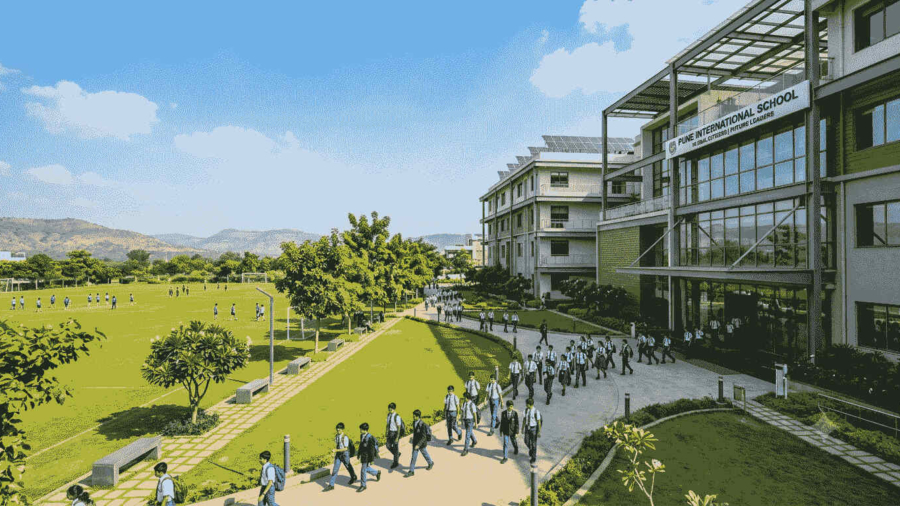
best schools in wakad and hinjewadi school campus guide

Best Schools in Wakad and Hinjewadi (2026): Fees, Boards & Guide

Best Schools in Wakad and Hinjewadi (2026): Fees & Guide
By Admin | Updated: September 2026 | 14 Min Read

Finding the best schools in Wakad and Hinjewadi is one of the top priorities for IT professionals and families moving to Pune’s western IT corridor. Covering Wakad, Hinjewadi Phase 1 to Phase 3, Maan, and Mahalunge, this belt has become a primary residential hub. Check out PuneBHK residential real estate insights to explore local housing trends alongside educational infrastructure.

The western suburb offers a wide range of choices, including trust-run non-profit CBSE institutions, ICSE schools, and high-tech international campuses providing IB curricula. Selecting the right option requires evaluating annual fee structures, board affiliations, infrastructure, and peak-hour traffic conditions. Discover how the best schools in Wakad and Hinjewadi compare across these four connected localities.

Disclaimer Note on Fee Structures & Data: Annual fees, transport charges, and admission deposits outlined in this guide are estimates derived from public filings, parent feedback, and educational portals. Readers can verify official board regulations on the Official CBSE Portal. Always verify exact figures directly with school admission offices prior to enrollment.

1. How to Choose Between Established and Modern Schools

When searching for the best schools in Wakad and Hinjewadi, parents usually choose between two main operational setups based on budget, learning preferences, and long-term goals.

A. Established Trust Institutions

Established institutions like Pawar Public School, Amrita Vidyalayam, Blue Ridge Public School, Akshara International School, and Indira National School follow traditional, structured academic frameworks. These non-profit trusts focus on consistent board examination results and discipline.

  • Proven Academic Results: These top institutions among the best schools in Wakad and Hinjewadi have consistent Class 10 and Class 12 board examination track records.
  • Lower Teacher Turnover: Faculty stability is higher, giving children consistent academic guidance throughout primary and secondary grades.
  • Predictable Fees: Annual tuition fees remain in moderate brackets with regulated revision cycles.
  • Key Consideration: Admission competition is high. Seat availability is limited, and priority is often given to sibling quotas or specific local township residents.

B. Modern Smart-Campus Schools

Newer options such as EuroSchool Wakad, PICT Model School, and Global Indian International School (GIIS) focus on technology-driven, experiential learning environments.

  • High-Tech Infrastructure: Classrooms feature interactive smart-boards, digital labs, robotics units, and modern sports facilities.
  • Flexible Admissions: Enrollment procedures are straightforward, making them convenient for parents relocating mid-academic year.
  • Skill Development: Curricula emphasize public speaking, coding, critical thinking, and co-curricular programs alongside core academic subjects.
  • Key Consideration: Annual tuition fees fall into higher price brackets, and yearly fee revisions tend to be higher than older trust schools.

2. Educational Board Comparison Matrix

Choosing the right educational board shapes your child’s learning approach, exam preparation, and readiness for national competitive exams or overseas university studies when exploring the best schools in Wakad and Hinjewadi.

Educational Board Core Curriculum Focus Best Suited For
CBSE (Central Board) Standardized national curriculum emphasizing Mathematics, Science, and logical reasoning. Families with inter-state transfers or students preparing for competitive exams like JEE/NEET.
ICSE / CISCE Detailed syllabus focusing equally on English literature, language fundamentals, arts, and humanities. Students looking for strong analytical writing, communication skills, and balanced education.
IB / IGCSE (International) Inquiry-based learning focused on application, research, critical thinking, and personal growth. Expat families, senior executives, or students targeting undergraduate studies abroad.

3. Complete Guide to the Best Schools in Wakad and Hinjewadi

Zone 1: Hinjewadi Phase 3 & Maan Belt

The Maan and Hinjewadi Phase 3 belt is ideal for professionals working in Phase 3 tech parks housing TCS, Cognizant, and Tech Mahindra, allowing them to avoid daily commuting through central Hinjewadi traffic while accessing the best schools in Wakad and Hinjewadi.

P

Pawar Public School

CBSE Established

Location: Hinjewadi Phase 3 / Maan

Est. Annual Fee: ₹80,000 – ₹95,000 / year

Pawar Public School is recognized among the best schools in Wakad and Hinjewadi for parents seeking budget-friendly, high-quality CBSE education. It offers a disciplined environment and strong academic results right next to Phase 3 IT companies.

Official Website: ppshinjewadi.ppctschools.com

Pros

  • Strong board examination track record
  • Affordable, transparent fee structure
  • Zero commute time for Phase 3 residents

Cons

  • Seats fill up very quickly
  • High competition during admission cycles
A

Amrita Vidyalayam

CBSE Established

Location: Hinjewadi Phase 3 / Maan

Est. Annual Fee: ₹60,000 – ₹80,000 / year

Amrita Vidyalayam is a well-known trust-run CBSE institution located in the Maan and Hinjewadi Phase 3 corridor. It ranks among the best schools in Wakad and Hinjewadi for parents seeking value-based education at a reasonable fee tier near major IT campuses.

Official Website: amritaschool.edu.in

Pros

  • Value-based academic focus
  • Highly budget-friendly fee structure
  • Minimal daily commute for Phase 3 tech employees

Cons

  • High admission demand for limited annual seats

Zone 2: Hinjewadi Phase 1 & 2 Belt

Hinjewadi Phase 1 serves as the core commercial sector of the IT park, offering walkable township layouts, health centers, and commercial hubs.

B

Blue Ridge Public School

ICSE Established

Location: Hinjewadi Phase 1

Est. Annual Fee: ₹70,000 – ₹1,10,000 / year

Located directly inside Phase 1, Blue Ridge Public School follows the ICSE board. It offers a walk-to-school setup for families residing in Phase 1, placing it prominently among the best schools in Wakad and Hinjewadi.

Official Website: blueridgepublicschool.com

Pros

  • Excellent ICSE academic performance
  • Access to integrated sports facilities
  • Walkable access for Phase 1 residents

Cons

  • Heavy shift-hour traffic near Phase 1 road
  • High preference for internal township owners
M

Mahindra Int’l School

IB Board Established

Location: Hinjewadi Phase 1

Est. Annual Fee: ₹5,000,000 – ₹12,000,000+ / year

Formerly Mercedes-Benz International School, Mahindra International School stands out among the best schools in Wakad and Hinjewadi as a premier IB World School. It offers global learning programs favored by expat families and senior executives.

Official Website: misp.org

Pros

  • Top-tier international IB framework
  • Multicultural student community
  • Direct path to overseas university admissions

Cons

  • Very high annual fee investment
  • Aimed mostly at expat and executive groups

Zone 3: Wakad Central Area

Wakad is the central residential area connecting the highway to Hinjewadi. Due to its location, Wakad features the highest number of options when searching for the best schools in Wakad and Hinjewadi.

A

Akshara International

CBSE Established

Location: Akshara Lane / Kaspate Wasto, Wakad

Est. Annual Fee: ₹85,000 – ₹1,15,000 / year

Akshara International School is consistently rated among the best schools in Wakad and Hinjewadi for parents seeking well-rounded CBSE education. It balances classroom academics with active sports programs.

Official Website: akshara.in

Pros

  • Strong academic and co-curricular programs
  • Central Wakad location
  • Reliable board examination performance

Cons

  • Morning drop-off traffic near Akshara Lane
E

EuroSchool Wakad

CBSE / ICSE Modern Campus

Location: Wakad Central

Est. Annual Fee: ₹1,10,000 – ₹1,60,000 / year

EuroSchool Wakad features modern campus facilities including smart classrooms, robotics labs, and sports turfs, making it a popular choice for IT parents evaluating the best schools in Wakad and Hinjewadi.

Official Website: euroschoolindia.com

Pros

  • Modern smart-classroom learning
  • Clear, organized admission process
  • Emphasis on STEM and practical skills

Cons

  • Higher fee range
  • Regular fee update cycles

Zone 4: Mahalunge Suburban Area

Mahalunge is a rapidly developing residential area linking Balewadi to Hinjewadi Phase 1 over the Mula River bridge, attracting many new homebuyers and young families looking for the best schools in Wakad and Hinjewadi.

P

PICT Model School

CBSE Modern Campus

Location: Mahalunge / Balewadi Border

Est. Annual Fee: ₹1,20,000 – ₹1,60,000 / year

PICT Model School focuses heavily on analytical thinking, science education, and technology. Located near the Mahalunge-Balewadi bridge, it stands out among the best schools in Wakad and Hinjewadi for science-focused learning.

Official Website: pictmodelschool.edu.in

Pros

  • Focus on STEM and logical thinking
  • Modern learning infrastructure
  • Easy access via the Mahalunge river bridge

Cons

  • Higher fee structure
  • Road work ongoing in nearby areas

4. Quick Comparison Table

Compare board choices, estimated fee ranges, and key features across the best schools in Wakad and Hinjewadi:

Locality Key Schools Covered Board Options Estimated Fee Range Key Highlights
Maan / Phase 3 Pawar Public, Amrita Vidyalayam CBSE ₹60,000 – ₹95,000 / yr Value for money; avoids main Hinjewadi traffic for Phase 3 employees.
Phase 1 & 2 Blue Ridge Public, Mahindra Int’l ICSE / IB ₹70,000 – ₹12,000,000+ / yr Walk-to-school options; ranges from ICSE to elite IB boards.
Wakad Akshara Int’l, EuroSchool CBSE / ICSE ₹75,000 – ₹1,60,000 / yr Highest school density; central location for commuters across Pune west.
Mahalunge PICT Model School, GIIS CBSE / IB ₹1,20,000 – ₹2,50,000+ / yr Modern campuses; focus on science, robotics, and global programs.

5. Essential Parent Checklist Before Finalizing Admission

Before confirming an admission or signing a rental lease near the best schools in Wakad and Hinjewadi, run through this practical checklist:

  1. Test Peak Travel Times: Test the school bus route between 7:30 AM and 8:30 AM. Crossing major junctions like Bhumkar Chowk or Dange Chowk can add 30 minutes to daily travel.
  2. Confirm Bus Routes: Always confirm with the school transport desk if their buses cover your specific building or lane.
  3. Ask for Total Annual Expenses: Request a complete fee document. Standard tuition numbers often exclude annual charges, security deposits, uniform kits, books, and bus fees.
  4. Verify Board Affiliation Status: Ensure newer or expanding school campuses hold updated affiliation certificates from CBSE, ICSE, or IB for senior grades.

Legal & Editorial Disclaimer

1. Image Attribution & Visual Representation: All visual assets consist of generic royalty-free stock imagery intended purely for conceptual visual representation. No image depicts actual physical premises, building facades, classrooms, or trademarked logos of the mentioned institutions.

2. Information Accuracy & Fee Revisions: School fee structures, admission criteria, quota allocations, and educational board affiliations are subject to independent periodic changes by respective school management boards and local fee regulation authorities. While all information is curated to reflect accurate 2026 guidelines, readers are strongly advised to independently verify current details directly with school administrative offices before making financial commitments.

3. Non-Commercial Disclosure: This editorial article is published strictly for informational, educational, and guidance purposes on PuneBHK.com. No compensation or promotional sponsorship was accepted from any school management, real estate developer, or educational trust mentioned within this post.

Looking for residential properties nearby? Explore our latest updates on PuneBHK.https://punebhk.com/

pune inner ring road map and route alignment for hinjewadi and wakad real estate

Pune Inner Ring Road Gets September Deadline: How Inner & Outer Ring Roads Connect to Transform West Pune Real Estate

Quick Fact Checklist: What is the Pune Inner Ring Road?

The Pune Inner Ring Road is an 83.12 km long, 65-meter-wide circular transit corridor managed by PMRDA to decongest internal suburban traffic across Pune and Pimpri-Chinchwad. Unlike the 172 km MSRDC Outer Ring Road designed for long-distance highway freight, the Pune Inner Ring Road directly links commercial and residential hubs including Hinjewadi IT Park, Wakad, Marunji, Chakan MIDC, and Wagholi.

Administrative Push to Fast-Track the Pune Inner Ring Road

In a decisive administrative push to relieve worsening traffic congestion in West Pune, District Collector Jitendra Dudi has issued strict operational deadlines for the proposed Pune Inner Ring Road land acquisition process.

During a high-level review meeting with Pune Municipal Corporation (PMC) Commissioner Naval Kishore Ram, PMRDA Additional Commissioner Poonam Mehta, and senior engineers, Collector Dudi instructed all departments to eliminate bureaucratic delays surrounding the Pune Inner Ring Road alignment.

Deadline Date Action Milestone Administrative Scope for Pune Inner Ring Road
August 31, 2026 File Submissions All pending land acquisition hearing files submitted to district administration office.
September 10, 2026 Ground Measurement Physical plot demarcations, GIS mapping, and survey verification begin on ground.
October 10, 2026 Valuation & Rates Joint agency meeting to determine market compensation rates for affected landowners.

PMRDA Inner vs. MSRDC Outer Ring Road: Dual-Ring Comparison

Homebuyers and real estate investors often confuse Pune’s two major infrastructure projects. Understanding the difference between the Pune Inner Ring Road and the MSRDC Outer Ring Road is essential for assessing localized housing appreciation:

Feature Parameter PMRDA Inner Ring Road MSRDC Outer Ring Road
Implementing Agency PMRDA (Metropolitan Authority) MSRDC (State Highways)
Total Corridor Length 83.12 km (65m Width) ~172 km (Access Controlled)
Primary Focus Suburban Commuting & IT Access Interstate Heavy Freight Bypass
Key Touchpoints Hinjewadi, Marunji, Wakad, Chakan Urse, Shirwal, Lonikand, Chakan
Real Estate Impact Housing Demand (2BHK/3BHK Apartments) Warehousing & Industrial Land Plots

How the Dual Ring Roads Intersect: The Transit Network Layout

The two ring roads do not compete; they operate as a synchronized two-tier transit network. Heavy long-distance trucks are captured on the outer perimeter, while local IT workers use the Pune Inner Ring Road to access residential corridors.

PMRDA & MSRDC Infrastructure Map

Pune Dual-Ring Road Network Architecture

Active Project Phase
NORTH NODE: Chakan MIDC & Solu / Tulapur Interchange

Links Pune-Nashik Highway (NH-60) to Industrial Logistics Belts

WEST PUNE SECTOR

Urse & Marunji Hubs

  • Urse Interchange: Direct exit off Mumbai-Pune Expressway
  • Hinjewadi Phases 1, 2, 3: Seamless worker transit without city jams
  • Wakad & Punawale: Bypasses heavy non-destination trucks
EAST PUNE SECTOR

Wagholi & Uruli Kanchan

  • Nagar Road (NH-753F): Direct bypass to Wagholi & Kesnand
  • Solapur Highway (NH-65): Connects Uruli Kanchan freight hub
  • Kharadi Fringes: Rapid accessibility to Eastern IT corridors
SOUTH NODE: Katraj, Dhayri & Bengaluru Highway (NH-48)

Connects Southern Radial Highway & Purandar Airport Bypass

MSRDC Outer Ring Road (~172 km)

Diverts Interstate Freight (Mumbai, Satara, Solapur trucks)

PMRDA Inner Ring Road (~83 km)

Suburban Commuter Loop (Hinjewadi, Wakad, Chakan, Airport)

Official Alignment GIS Layout

Pune Dual-Ring Road Network Route Map

Highways & IT Corridors
N E W S To Mumbai (NH-48) To Nashik (NH-60) To Ahmednagar To Solapur (NH-65) PUNE CITY CORE (PMC / PCMC Limits) URSE NODE (Expressway Exit) HINJEWADI Phases 1, 2, 3 Wakad / Marunji CHAKAN MIDC SOLU NODE (Priority Stretch) Wagholi Belt URULI KANCHAN (Solapur Rd Exit) Katraj / Dhayri
PMRDA Inner Ring Road (83.12 km Urban Loop)
MSRDC Outer Ring Road (~172 km Freight Bypass)
Major Interchange Nodes (Urse, Solu, Uruli)

Key Junction Interchanges on the Pune Inner Ring Road:

  • Urse Node (North-West): Links the Mumbai-Pune Expressway directly to the Pune Inner Ring Road, providing seamless entry to Hinjewadi Phase 3 without entering city bottlenecks.
  • Solu / Tulapur Node (North-East): Connects the Chakan industrial manufacturing belt to eastern Pune corridors.
  • Uruli Kanchan Node (East): Bridges Solapur Highway (NH-65) traffic with Wagholi and Kharadi IT zones.

Watch Media Report: ₹10,502 Cr Approved for Pune Ring Road Expansion

ABP MAJHA news coverage on state approvals and budget clearance for the Pune Ring Road project.

Looking to verify property approvals near infrastructure zones? Read our detailed guide on PMRDA Development Plan (DP) 2041 zoning rules in Pune.


Estimated Completion Timeline, Project Challenges & Delays

While District Collector Jitendra Dudi has enforced firm September land measurement targets, execution across an 83 km urban stretch involves realistic engineering and administrative phases for the Pune Inner Ring Road:

Project Phase Target Window Ground Status & Potential Challenges
Land Acquisition & Valuation Q3 2026 – Q1 2027 Joint measurement starting Sept 10, 2026. Challenges include resolving compensation disputes across private village plots.
Phase 1 Execution (Western Stretch) 2027 – 2028 Priority section linking Urse to Hinjewadi Phase 3 and Marunji. Expected to move faster due to cleared ROW alignments.
Phase 2 Execution (Eastern & Southern) 2028 – 2029 Connecting Wagholi, Solu, and Katraj outer corridors. Delays may stem from dense urban utility shifts and flyover constructions.

Major Bottlenecks Being Resolved:

  1. Compensation Rates: Land valuation disputes in urbanizing villages often slow file clearances. The October 10 meeting aims to set standardized compensation benchmarks.
  2. Inter-Departmental File Approvals: Strict reviews ensure proposals for the Pune Inner Ring Road do not stall between PMC, PMRDA, and district revenue departments.

Strategic Impact on Hinjewadi IT Park & West Pune Real Estate

For IT professionals and real estate buyers in West Pune, the completion of key segments of the Pune Inner Ring Road directly addresses daily commute issues along Wakad Bridge, Bhumkar Chowk, and Chandani Chowk.

Key Real Estate Benefits of the Pune Inner Ring Road:

  • Reduced Transit Times: IT workers traveling from Marunji or Punawale into Hinjewadi Phase 3 bypass inner city congestion.
  • Residential Value Growth: Micro-markets near planned interchanges—such as Wakad, Tathawade, Marunji, and Punawale—are seeing increased interest for 2BHK and 3BHK residential investments.
  • Commercial Development: Multi-modal nodes around interchange junctions encourage retail, office, and commercial construction.

Looking for homes near upcoming infrastructure corridors? Browse verified listings for ready 2BHK flats in Hinjewadi and Wakad.


Frequently Asked Questions (FAQs)

Q1. What is the latest update on the Pune Inner Ring Road land acquisition?

District Collector Jitendra Dudi ordered all pending land acquisition cases to be submitted by August 31, 2026, with physical land measurement and mapping starting on September 10, 2026. Land valuation rates will be discussed in an October 10 meeting.

Q2. How does the Pune Inner Ring Road help Hinjewadi commuters?

It links the Mumbai-Pune Expressway directly to Hinjewadi Phase 3 via Marunji, allowing commuters to bypass heavy traffic at Bhumkar Chowk and Wakad Flyover.

Q3. What is the difference between the PMRDA Inner Ring Road and MSRDC Outer Ring Road?

The 83.12 km PMRDA Inner Ring Road caters to internal suburban commuter traffic and IT park connectivity. The 172 km MSRDC Outer Ring Road diverts long-distance heavy national freight around Pune.

Disclaimer & Editorial Note:

The infrastructure information, land acquisition timelines, route alignments, and project dates mentioned in this article are based on official public announcements, administrative review updates (including PMRDA & Pune District Collectorate notifications), and local news reports. Infrastructure project timelines, land rates, Right-of-Way (RoW) demarcations, and acquisition proceedings are subject to government policy updates, administrative revisions, and legal proceedings. Readers, homebuyers, and real estate investors are strongly advised to independently verify property titles, 7/12 land extracts, and official zoning boundaries directly through official government portals (PMRDA / Revenue Department) before entering into any real estate transaction. PuneBHK.com is an independent property portal and content site; it does not represent any government authority.


Stay updated on Pune’s real estate market and infrastructure developments. Explore curated property listings and market insights at PuneBHK.com.

Co-ownership of commercial property in India legal guide and investment structures

Co-Ownership of Commercial Property in India: 2026 Guide

Co-ownership of commercial property in India legal guide and investment tips

Understanding co-ownership of commercial property in India has matured rapidly between 2023 and 2026 due to SEBI’s SM-REIT regime, stronger SPV governance, and professional due diligence. It suits yield-focused retail and HNI investors seeking entry into pre-leased Grade-A offices and logistics warehouses. Before deploying capital into joint real estate ventures, verifying property ownership structures, escrow controls, and exit mechanics is paramount. Use our 6-point checklist below to vet any commercial deal before money moves.

1. Market Trajectory & Investor Profiles (2023–2026)

The market for fractional investment and co-ownership of commercial property in India has grown exponentially. Industry data highlights that strata sales and fractional platform structures represent over 28% of top-tier Grade-A office stock across India’s primary metro hubs. Today, co-ownership operates across two distinct investment lanes:

  • Platform-Mediated Fractional Ownership: Designed for retail and HNI investors with minimum entry tickets ranging from ₹10 lakh to ₹25 lakh.
  • Strata & Undivided Share Models: Geared toward high-net-worth individuals and family offices acquiring entire office floors or commercial bays in high-growth corridors like Hinjewadi and Kharadi.

Millennials and NRI investors account for over 60% of new fractional buyers, attracted by digital onboarding, professional facility management, and consistent net rental yields averaging 7% to 9% annually.

2. Legal Frameworks for Co-Ownership of Commercial Property in India

When entering into co-ownership of commercial property in India, selecting the appropriate legal wrapper dictates your voting rights, tax liabilities, and resale exit routes. Below are the primary holding structures used in current term sheets:

Structure Type Typical Ticket Size Key Governance Features Primary Risks / Considerations
SPV (Pvt Ltd) + SHA ₹25 Lakh – ₹3 Crore+ Limited liability; cap table clarity; drag/tag rights; escrow collections. Requires strong Shareholders Agreement (SHA) to protect minority buyers.
LLP Agreement ₹10 Lakh – ₹2 Crore Contractual profit/loss allocation; flexible operational rules. Dispute resolution under vague LLP deeds can be slower than company law remedies.
Trust + SM-REIT (SEBI) ₹10 Lakh minimum Independent trustee oversight; mandatory disclosures; public listings. Higher platform compliance overhead; secondary trading market maturation needed.
Undivided Share (UDS) Varies widely Direct legal names on title deed; defined share allocation. Partition disputes if deed lacks unanimous voting or veto clauses.

3. Regulatory Inflection: SEBI SM-REIT Guardrails

In March 2024, the Securities and Exchange Board of India (SEBI) introduced formal Small and Medium REIT (SM-REIT) guidelines to regulate fractional ownership platforms. Key regulatory guardrails protecting co-owners include:

  • Asset Qualification: At least 95% of scheme assets must be invested in completed, revenue-generating commercial assets.
  • Minimum Thresholds: Each SM-REIT scheme must hold assets valued at ₹50 crore or more with at least 200 unitholders.
  • Capital & Governance: Investment managers must maintain a net worth of at least ₹20 crore and operate under trustee supervision.

To insulate your capital when structuring a co-ownership of commercial property in India, implement these four legal safeguards:

A. Ring-Fencing Liabilities: Utilize an SPV or SM-REIT trust so that operational liabilities, municipal tax assessments, and tenant disputes stay isolated within the holding vehicle. Always verify property registration on the MahaRERA Portal for under-construction assets.

B. Mandatory SHA Clauses: Ensure your Shareholders Agreement includes Reserved Matters (requiring super-majority votes for asset sales or refinancing), Right of First Refusal (ROFR), Tag-Along/Drag-Along exit rights, and structured deadlock arbitration mechanics.

C. Tax Optimization (Section 26): Under Section 26 of the Income Tax Act, rental income from a co-owned commercial asset is assessed individually for each partner according to their specified share, enabling each owner to apply separate tax brackets and claim individual 30% standard deductions under Section 24(a).

5. Technical & Financial Due Diligence Protocol

Proper due diligence goes beyond basic title checks. Before committing funds to a joint commercial asset, verify:

  • Weighted Average Lease Expiry (WALE): Ensure the property has a healthy WALE of at least 3 to 5 years with established corporate lock-in clauses.
  • Escrow Account Mandate: Confirm that monthly tenant lease payments flow into a dual-signatory escrow bank account with pre-set distribution rules.
  • Independent MEP & Structural Audits: Verify mechanical, electrical, plumbing, and safety certifications for Grade-A building specs.

6. Pune & Maharashtra Commercial Market Outlook

Pune’s commercial real estate corridors—specifically IT/ITeS hubs in Hinjewadi, Kharadi, Viman Nagar, and industrial belts along Chakan—have emerged as prime target zones for commercial co-ownership. Pre-leased office floors backed by Grade-A multinational tenants deliver attractive rental yields averaging 8% to 8.5%. You can review active investment opportunities and micro-market trends directly on commercial real estate in Pune.

7. 6-Point Investor Vetting Checklist (2026 Standard)

Before transferring booking tokens for any joint commercial investment, verify these six core metrics:

  1. Vehicle Structure: Is the asset held via SPV, LLP, or a registered SEBI SM-REIT trust?
  2. Title & Encumbrance Audit: Are title search reports and municipal sanctions clear of pending litigation?
  3. Escrow Rent Waterfall: Does rental income flow into a trustee-monitored escrow account with clear monthly distribution rules?
  4. Tenant WALE & Escalation: What is the Weighted Average Lease Expiry (WALE) and rent escalation schedule (typically 15% every 3 years)?
  5. Exit Roadmap: Are pre-agreed 3 to 5-year exit windows, tag-along clauses, or platform secondary transfer mechanisms clearly defined?
  6. SEBI Compliance Status: Is the managing platform fully registered under SEBI SM-REIT norms or executing a formal migration plan?

8. Frequently Asked Questions (FAQs)

Q1: How is rental income taxed under co-ownership of commercial property in India?

Under Section 26 of the Income Tax Act, rental income from co-ownership of commercial property in India is taxed individually according to each owner’s declared share, provided ownership percentages are specified in the registered sale deed.

Q2: What are SEBI’s key SM-REIT rules for fractional ownership platforms?

SEBI requires SM-REIT schemes to invest at least 95% of assets in completed, income-generating commercial real estate, mandates a minimum asset value of ₹50 crore, and enforces strict trustee governance.

Q3: Where can I evaluate verified commercial investment options in Pune?

You can analyze pre-leased Grade-A office spaces, retail assets, and local market reports on our advisory portal at punebhk.com.

Q4: What is the difference between Tenancy-in-Common and Joint Tenancy in India?

Under Tenancy-in-Common, each co-owner holds a defined share that passes to legal heirs upon death. Under Joint Tenancy, ownership passes directly to surviving co-owners.

Explore Verified Commercial Properties on punebhk.com

Whether you are evaluating fractional ownership in Grade-A office parks or looking to co-own commercial high-street spaces, strategic asset selection and legal due diligence are critical. Explore verified options for commercial real estate in Pune or speak with our investment advisory team today at punebhk.com.